

Additional information
| Description | Biotin LC hydrazide serves as a reactive probe essential for biotinylating carboxyl or vicinal hydroxyl groups on carbohydrates, glycoproteins, or other glycoconjugates [1]. This versatile compound is also utilized in linking biotin to antibodies and ribonucleotides [1, 2]. Featuring an elongated spacer arm, Biotin LC hydrazide effectively minimizes steric hindrances, ensuring efficient coupling reactions in diverse biological contexts. |
|---|---|
| Reference | [1] Diamandis, E.P., and Christopoulos, T.K. The biotin-(strept)avidin system: Principles and applications in biotechnology. Clin. Chem. 37(5), 625-636 (1991). |
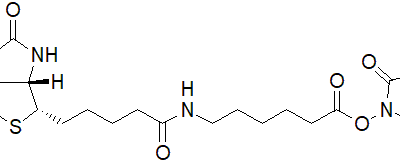
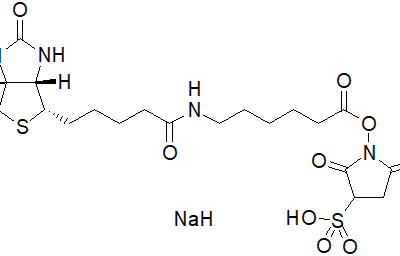
![6-(6-(5-((3aS,4S,6aR)-2-Oxohexahydro-1H-thieno[3,4-d]imidazol-4-yl)pentanamido)hexanamido)hexanoic acid](https://crolaboratories.com/wp-content/uploads/2022/09/B-22007-400x205.png)
